
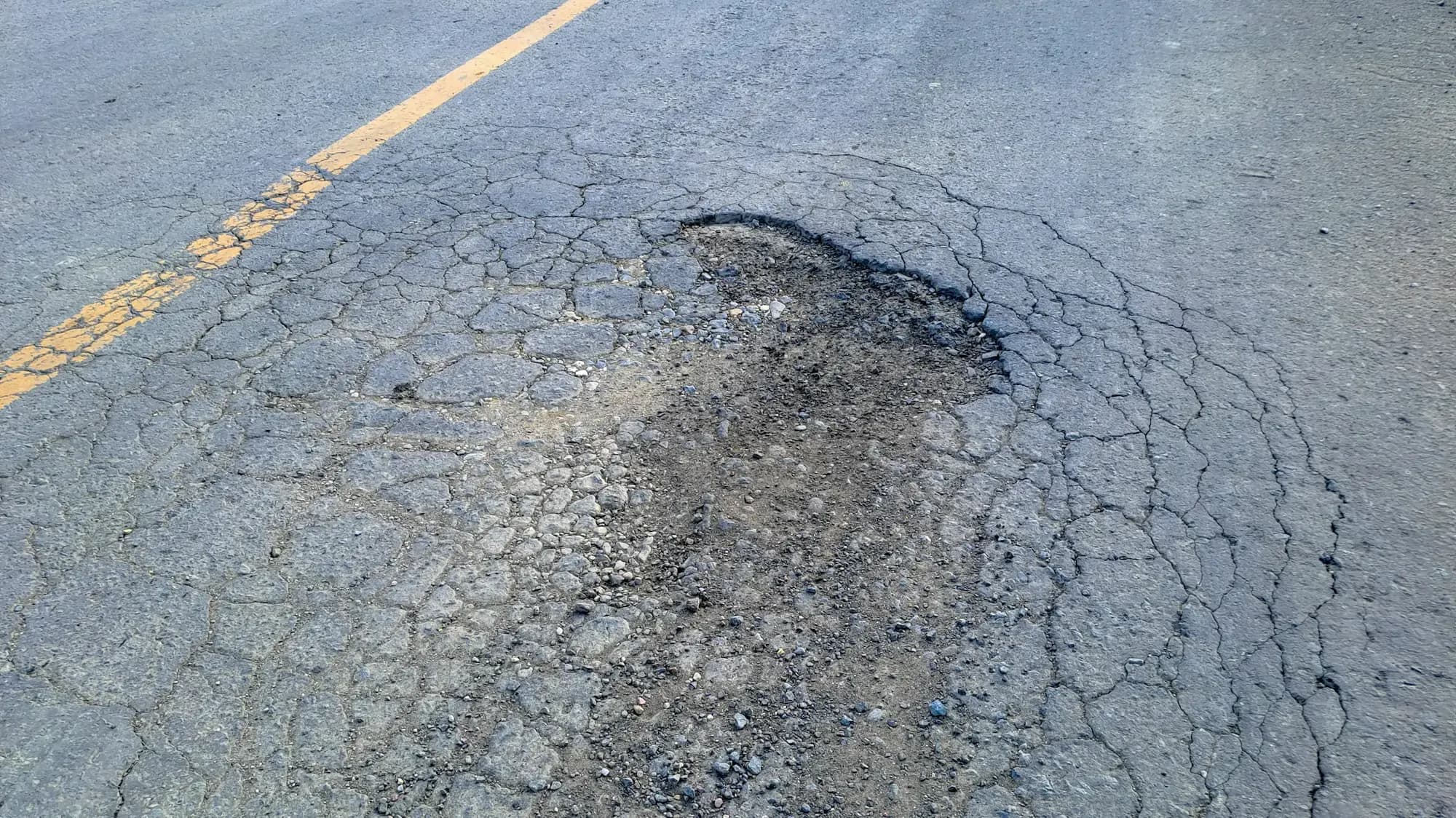
Road maintenance is most visible when something has already gone wrong: a pothole opens, a lane begins to rut or deteriorated pavement generates complaints. But pavement-preservation programs are designed around a different principle—intervene while an asset can still benefit from timely, cost-effective treatment rather than allowing every manageable problem to become a larger rehabilitation need. FHWA describes pavement preservation as planned work that sustains a transportation facility in good repair and can extend service life and functionality.
The challenge is timing. Treat a pavement unnecessarily early and scarce funds may generate limited additional value. Wait too long and a relatively modest preservation treatment may no longer be appropriate. Reliable condition data helps road owners make that timing decision more systematically.
Why “keep good roads good” is an asset-management strategy
FHWA commonly summarizes pavement preservation with the concept of keeping good roads good: use appropriate treatments while a pavement remains in a condition where preservation can slow deterioration and maintain functionality cost-effectively.
That does not mean ignoring roads in poor condition. It means managing the network as a portfolio rather than allocating every available dollar to whichever segment looks worst today.
The planning question becomes broader: Which assets need major intervention now, and which are approaching a point where a smaller, well-timed treatment could protect considerably more remaining value?
That is where condition intelligence becomes an asset-management tool rather than simply an inspection record.
Condition data makes treatment timing more defensible
FHWA notes that pavement-condition information is a key component of pavement management. It can be used to model pavement performance, trigger actions from maintenance to reconstruction, evaluate program effectiveness and support other network-level decisions.
When inspections are infrequent or difficult to compare, deterioration may progress without providing planners with a clear trend. Repeatable, georeferenced inspection creates the possibility of comparing the same segments through time.
A crack pattern that appears relatively stable may warrant continued monitoring. Rapidly changing distress may justify earlier investigation. Neither observation automatically determines the engineering treatment, but both provide a stronger basis for deciding where expert attention should go.
Life-cycle cost is bigger than the construction invoice
The least expensive treatment today is not necessarily the lowest-cost strategy over an asset's entire life.
FHWA defines life-cycle cost analysis as an engineering-economic approach for comparing alternative investments, including initial costs and discounted future costs such as maintenance, rehabilitation and reconstruction. More comprehensive analyses can also consider user costs associated with work zones and vehicle operation.
This matters in Canada because the infrastructure-renewal requirement is already substantial. Statistics Canada reported that owners of core public infrastructure estimated $294.4 billion was required at the end of 2022 to rehabilitate or replace existing assets to upgrade or maintain them in good condition. Transportation infrastructure—including roads, bridges, tunnels, active transportation and public transit—represented $160.8 billion, or 55%, of that estimated renewal requirement.
With needs at that scale, reactive maintenance by itself is not a sustainable planning philosophy.
Better inspection supports better prioritization
Inspection technology cannot create an unlimited maintenance budget. It can, however, improve the evidence used to allocate the budget that exists.
A useful condition-management workflow associates observed defects with their location, extent or severity, road class, maintenance history and intervention criteria. Decision-makers can then distinguish immediate repairs from preservation candidates and longer-term rehabilitation projects.
Vehicle-based imaging, three-dimensional surface measurement and automated defect analysis can make network assessment more scalable, but engineering oversight remains critical. The objective is not to automate the budget decision; it is to give the people making that decision a better and more consistent evidence base. FHWA's condition-data guidance similarly emphasizes the link between trustworthy data and reasonable pavement-management recommendations.
Prevention can also reduce costs experienced by road users
Pavement condition has consequences beyond an agency's maintenance ledger. FHWA's highway investment models account for relationships between pavement roughness and vehicle operating costs—including fuel, tires, maintenance, repair and depreciation—and show lower modeled operating costs on smoother pavement under otherwise comparable conditions.
That does not mean every maintenance treatment will produce a specific guaranteed economic return. It does mean that pavement quality has system-level effects, strengthening the case for evaluating road condition as an asset-management issue rather than simply a cosmetic one.
Inspection is valuable when it improves timing
The strongest strategy is therefore not simply “inspect more.” It is inspect well enough to act at the right time.
Roadinteli's focus on non-destructive data collection, defect classification, maintenance prioritization and repair-planning inputs is built around that objective.
For road owners, the business case for improved inspection becomes most compelling when condition data can be traced directly to treatment timing, budget decisions and long-term asset outcomes.
Sources
- FHWA — Pavement Preservation (opens in a new tab)
- FHWA — Life-Cycle Cost Analysis (opens in a new tab)
- FHWA — Practical Guide for Quality Management of Pavement Condition Data Collection (opens in a new tab)
- Statistics Canada — Canada's Core Public Infrastructure Survey: Required renewal budgets, 2022 (opens in a new tab)
- FHWA — Highway Investment Analysis Methodology (opens in a new tab)